
A 4G PoC radio is a push-to-talk device that carries voice through a mobile data network and a compatible communication platform. For UAE businesses with staff across several branches, cities or vehicles, it can offer a practical alternative to conventional two-way radio.
This guide is for logistics managers, security supervisors, field service coordinators and other buyers comparing communication systems. The right choice depends on where your staff work, how reliable connectivity is, and what the system will cost to maintain.
Conventional handheld radios transmit voice over radio frequencies. In direct mode, compatible radios communicate with each other without a mobile phone network or internet connection. Their channels and operating modes must be compatible, and the frequencies must be authorised for the intended use.
Coverage depends on transmitter power, antennas, terrain, building materials and interference. Two people working on the same site may communicate directly, but staff separated by concrete structures, hills or substantial distances may encounter dead zones.
A compatible repeater can extend coverage by receiving and retransmitting signals from a suitable location. For example, the Rover R-5000D digital DMR repeater is an option to evaluate when designing a compatible digital radio system.
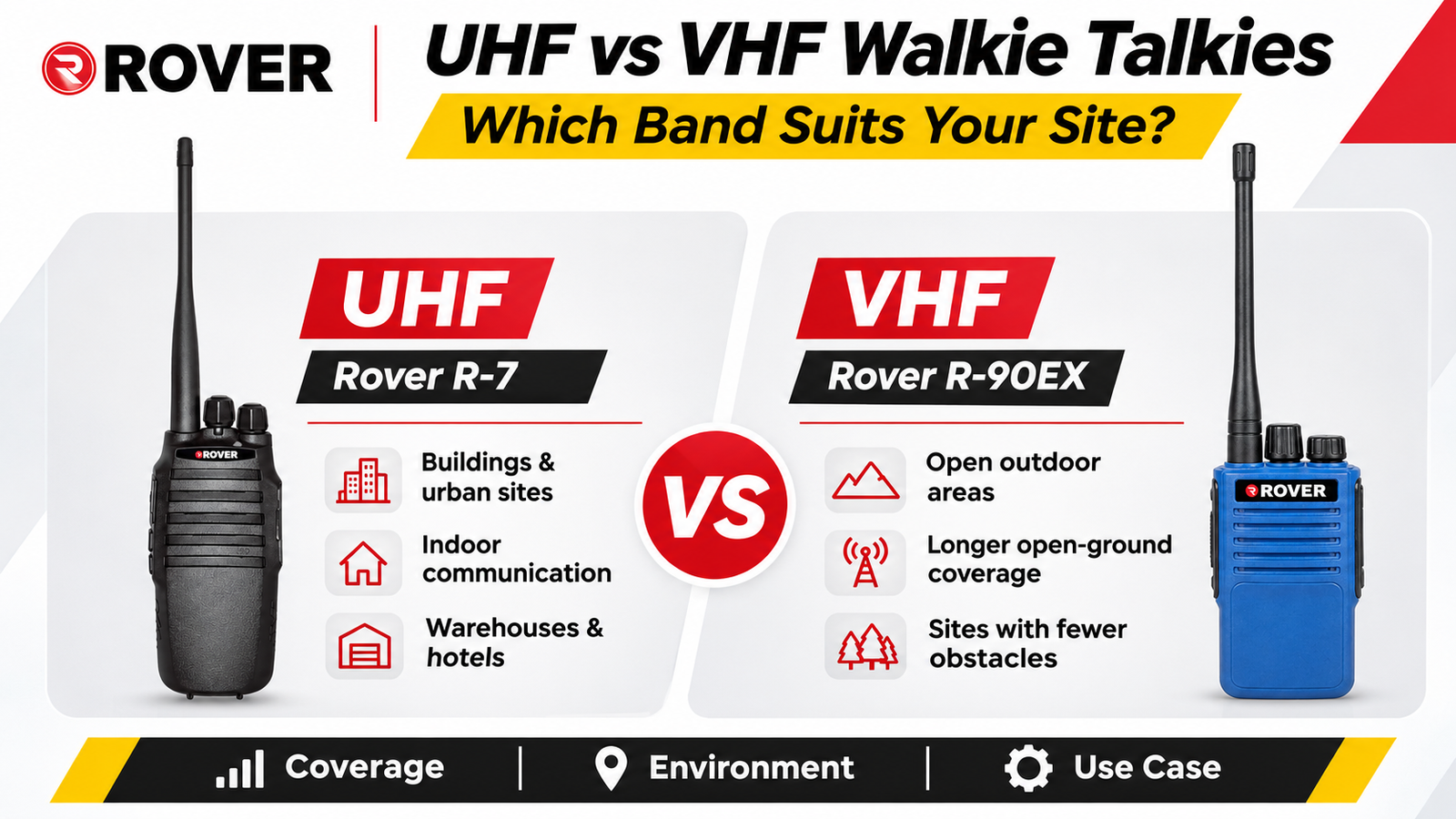
The Rover R-8 is a conventional UHF example, with 400–480 MHz tuning range, 2 W output, 128 channels and TDRA approval. Its tuning range is not permission to transmit on every frequency. Read our UHF vs VHF guide for more about choosing a band.
PoC means push to talk over cellular. Instead of sending voice directly to another handheld on a conventional radio channel, the device connects to a mobile data network using a SIM or supported subscription. A PoC platform manages users and distributes voice to the intended recipients.
When an employee presses the talk button, the service routes the audio to compatible devices in the selected group. Those devices can be in another building or city, provided they have usable connectivity and access to the service.
An LTE walkie talkie therefore depends on more than the handset. Mobile coverage, data access, platform availability and account configuration all influence communication. A strong mobile signal alone does not guarantee that a particular platform is reachable.
Some platforms offer private calls, group management, location reporting and dispatch features. Availability varies by device and service, so request a demonstration of the features you need rather than assuming every model supports them.
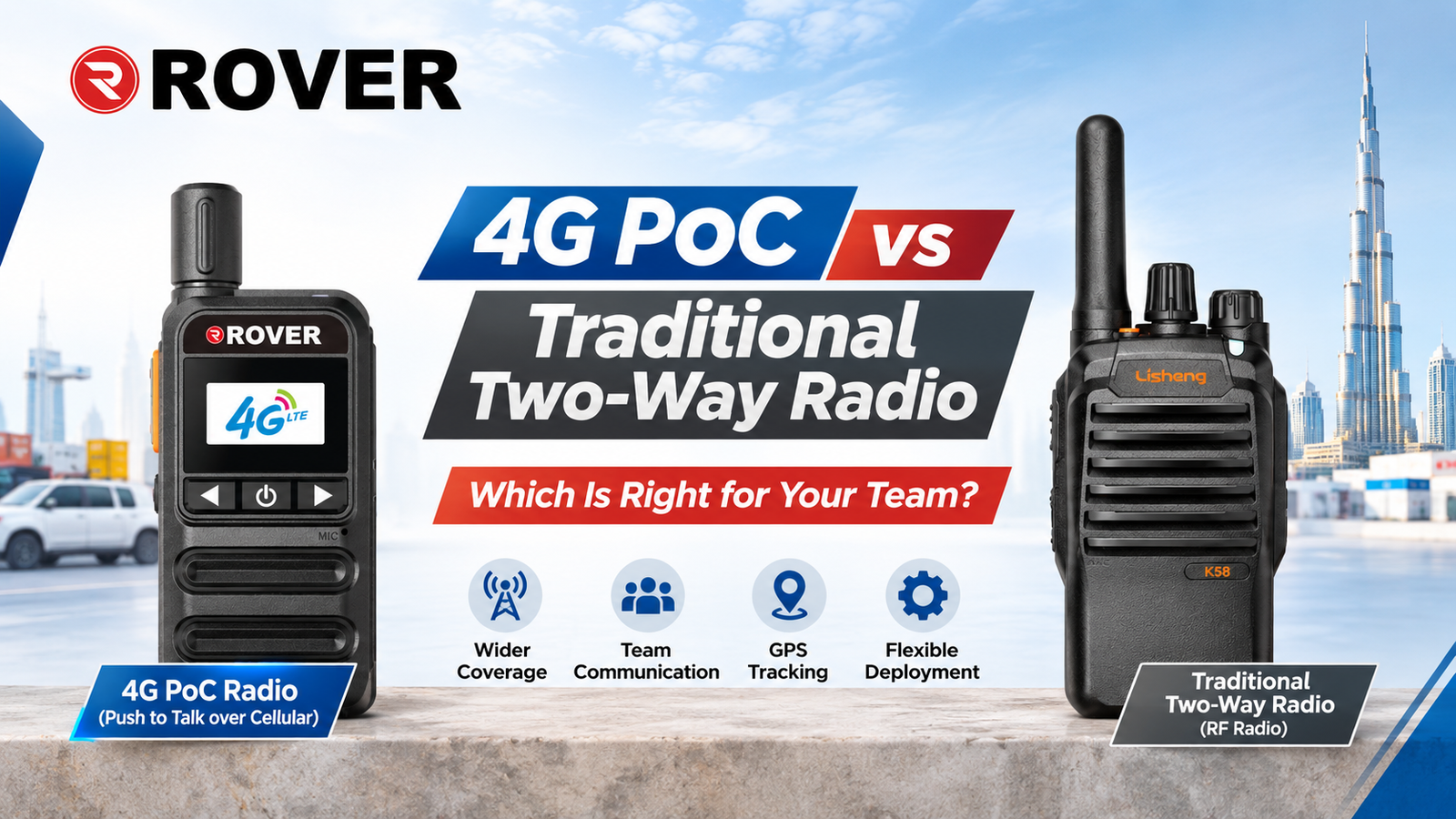
Use this PoC vs two way radio comparison to assess the system as a whole. The table describes typical arrangements, not guaranteed capabilities of individual models.
| Factor | 4G PoC | Traditional two-way radio |
|---|---|---|
| Coverage | Across connected locations with suitable network and service availability | Local radio coverage, potentially extended by repeaters |
| Setup | Provision devices, data subscriptions and platform accounts | Configure compatible radios and authorised channels; install infrastructure if needed |
| Running costs | Data and platform fees may recur | Direct operation needs no SIM; authorisation and infrastructure costs may apply |
| Dependence on network | Requires a usable connection to the PoC service | Direct radio mode does not require mobile data |
| Group and private calls | Depends on platform and device support | Depends on radio technology and configuration |
| GPS tracking | Requires supported hardware and service features | Available on certain systems with suitable equipment and software |
| Best for | Dispersed teams and mobile operations | Local sites and locations with unreliable cellular connectivity |
A 4G PoC radio can be particularly useful when employees frequently move outside the coverage area of a single conventional radio system. Rather than building repeater infrastructure at every location, a business may use existing cellular connectivity where it meets operational requirements.
Multi-city teams: A supervisor can coordinate staff in several branches through compatible talk groups. A company evaluating a nationwide walkie talkie UAE solution should test coverage at each branch and on regular travel routes.
Logistics and delivery: Dispatchers and drivers may benefit from a common communication group while vehicles move between warehouses and customer locations. Check vehicle charging arrangements and establish safe procedures for communicating while driving.
Field service: Technicians visiting different customer sites can receive updates without returning to a central radio coverage area. Test indoor reception at the kinds of premises they regularly visit.
Security patrols: Managers responsible for several properties can use a common PoC platform for coordination. If patrol routes include underground or isolated areas, evaluate a backup radio system as well.
For a hotel, warehouse, shopping centre or construction site where teams work within one defined area, conventional radio may be simpler. If a coverage test confirms reliable direct communication, the business may not need a cellular subscription for each employee.
Basements, remote yards and desert locations sometimes have weak mobile coverage. Conventional radios can still communicate if a suitable radio path exists, although they also have limitations underground or behind substantial obstacles. Test both technologies rather than assuming one will always work.
Direct radio operation does not require monthly SIM or PoC platform payments. However, spectrum fees, maintenance and repeater costs may apply. A conventional system can also remain useful during mobile network congestion or outages, provided its own equipment and infrastructure remain operational.
For emergency planning, do not assume ordinary cellular PoC provides priority access or guaranteed availability. Likewise, a conventional radio system is not automatically resilient. Establish tested backup communications, charging arrangements and clear escalation procedures.
Compare ownership costs over the same period and for the same number of users. A lower handset price does not necessarily mean a lower system cost.
For PoC: Budget for handsets, batteries, chargers, SIM or data subscriptions, platform accounts, user administration and any dispatch or location features you require. Ask whether subscriptions are billed per user or device and what happens if service is suspended.
For conventional radio: Budget for handsets, programming, accessories, coverage surveys and any required spectrum authorisations. Where repeaters are needed, include antennas, installation, power supplies, maintenance and suitable equipment locations.
For UAE regulatory information, consult TDRA’s equipment registration and approval service and Private Mobile Radio authorisation service. Equipment approval and permission to use spectrum are separate considerations.
Request an itemised quotation covering both initial and recurring charges. Ask about replacement devices, technical support, account cancellation and the ability to expand your fleet.
Yes. A mixed fleet can combine conventional radios for local operations with a 4G PoC radio system for communication between properties. For example, a facility team may use local radio channels while regional supervisors coordinate through cellular push-to-talk.
Specialised gateways may bridge compatible conventional radio systems and PoC platforms. This requires careful integration, permissions and configuration; it is not an automatic capability of every network radio. Confirm interoperability and test group calls, audio quality and failure scenarios before relying on a bridge.
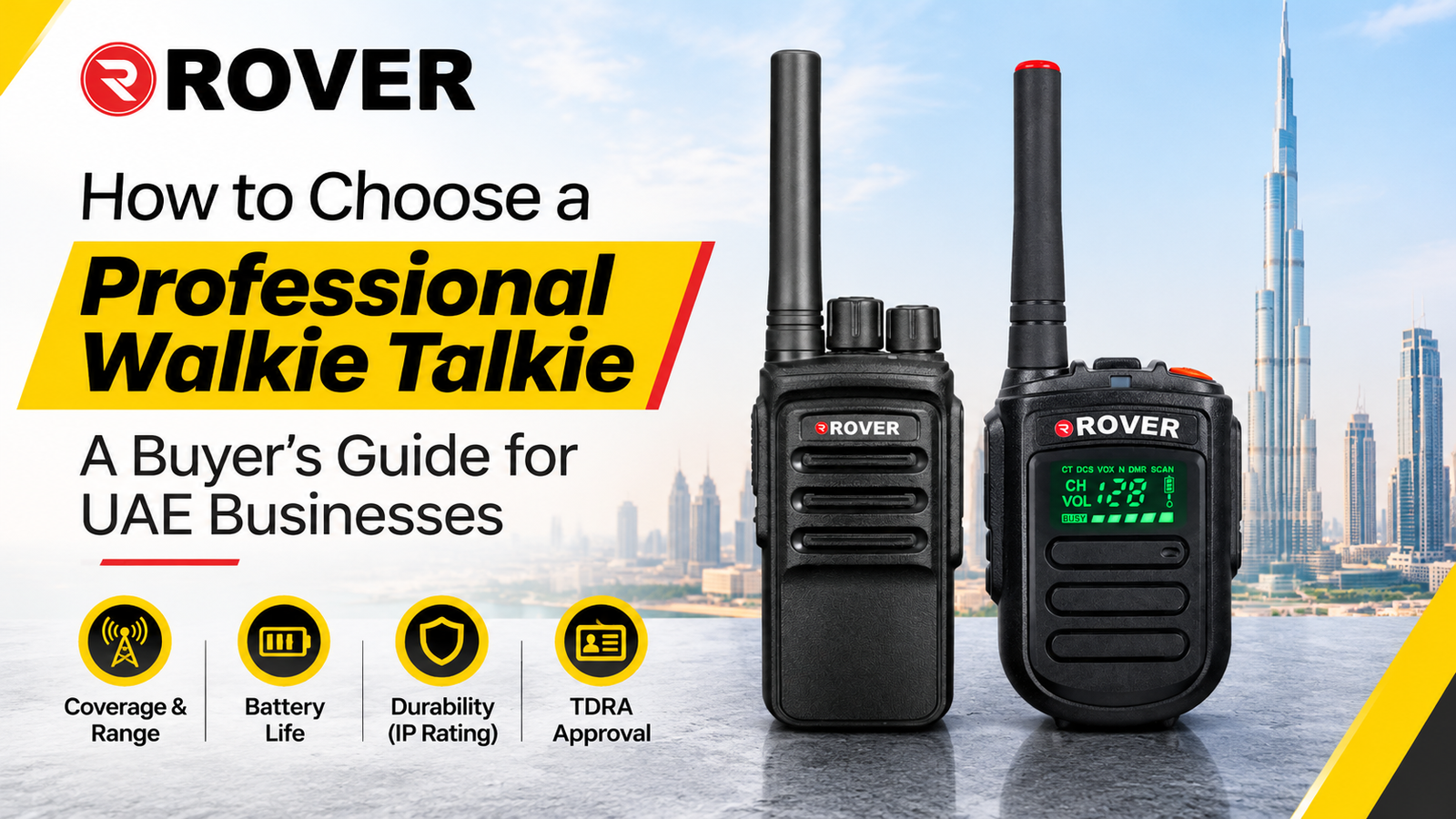
For a wider assessment of durability, battery requirements and purchasing criteria, see our professional walkie talkie buying guide.
The following models provide a starting point for comparing Rover’s cellular communication range. Confirm the supported platform, SIM arrangements and specific features with your supplier.
| Model | Listed specifications | Use case to assess |
|---|---|---|
| Rover R-9Plus | 4G LTE network radio; nationwide push-to-talk | Dispersed teams and multi-site coordination |
| Rover R-88 | 4G LTE PoC; IP54; GPS | Field teams requiring location-capable hardware |
| Rover R-2 | 4G PoC LTE; nationwide push-to-talk | Mobile staff and distributed operations |
Browse the Rover 4G PoC radio range for model details. Nationwide push-to-talk remains dependent on suitable network coverage and service access. IP54 is not a waterproof immersion rating, and GPS hardware alone does not guarantee a tracking service.
For cellular operation, it normally needs an active SIM or equivalent supported mobile subscription with data access. It also needs access to a compatible PoC service. Confirm the subscription and provisioning arrangements with your supplier.
Ordinary cellular PoC cannot exchange calls without a usable connection to its service. Some devices or platforms support Wi-Fi, but this must be verified for the specific deployment. Plan an alternative communication method for uncovered locations.
It depends on the number of users, coverage requirements and recurring service costs. Compare devices, subscriptions, infrastructure, authorisations and maintenance over the same ownership period.
Yes, compatible radios connected to the same service can communicate across cities where suitable network coverage and platform connectivity are available. Test the actual routes and buildings your teams use.
Requirements depend on the equipment, service and intended operation. Cellular PoC uses an operator’s network rather than your own conventional radio channel, but equipment approval and applicable service requirements still matter. Check with TDRA or your supplier for the exact deployment.
Choose a 4G PoC radio when dispersed teams need reliable connectivity across locations, or conventional radio when local communication and independence from cellular networks matter most. A mixed approach may suit both needs. To arrange a demonstration or request a quotation, contact Rover or WhatsApp +971 50 770 3906.